 3 months ago
247
3 months ago
247
By: H.E. Barbara Szymanowska, Ambassador of the Republic of Poland to Indonesia*)
It has been my great honour to represent Poland in Indonesia for almost a year now. This is already my second Ramadan that I experience here, in the country with the largest Muslim population in the world.
Having served in different cultural and religious context throughout my diplomatic career – including other Muslim-majority country – yet coming from Poland, a nation with a predominantly Catholic tradition, I experience Ramadan here with deep respect and particular attentiveness. Observing the spiritual energy, sense of community and the unique rhythm that Ramadan brings to daily life in Indonesia has encouraged me to reflect on how this holy month is observed in Poland.
Ramadan in Poland carries a unique and inspiring character. It is observed in a country where Muslims are a small minority, yet where Islam has been present for more than 600 years thanks to the historic community of the Lipka Tatars. This remarkable combination of deep-rooted tradition and modern multicultural diversity gives Ramadan in Poland a very special atmosphere – one that may surprise many readers in Indonesia.
Today, it is estimated that around 40,000–50,000 Muslims live in Poland, including approximately 5,000–10,000 members of the historic Lipka Tatar community. Alongside them are students, professionals, entrepreneurs and families from various Muslim-majority countries – including a growing number of Indonesians who work or study in Poland. Many Indonesians happily share their Ramadan experiences in Poland through social media and interviews with Indonesian media, showing that the spirit of Ramadan transcends geography.
Perhaps the best introduction is provided by Muhammad Inditiya Gegar Laras, an Indonesian student living in Warsaw, who in an interview with Radio Republik Indonesia shared some of his personal reflections: “Ramadan in Poland is markedly different. Islam is a minority religion in the country, where the majority of the population is devoutly Catholic. Nevertheless, this has not posed an obstacle. Local communities are described as highly tolerant, and Poland is regarded as a country with strong interfaith respect.”
Faith, fasting, and the bonds of community
Like in Indonesia, Muslims in Poland observe the essential pillars of Ramadan:
• Suhur before dawn
• Fasting from food, drink (including water), smoking and other pleasures
• Iftar after sunset
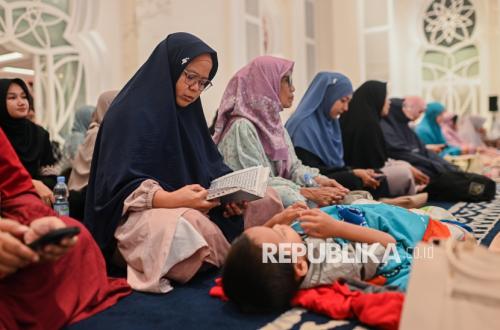
• Tarawih prayers in the evening
Yet the Polish context adds its unique touch. Because of Poland’s geographic location in Central Europe, the length of fasting depends greatly on the season. In summer, daylight can last 16-17 hours, making the fast particularly long and demanding. However, when Ramadan falls in Polish winter – as it did in 2026, beginning on 18 February – the fasting day lasts around 10 hours, which feels quite manageable compared to summer months.
In larger cities such as Warszawa, Kraków, Gdańsk or Poznań, communities organize daily or weekend iftars. These gatherings are held in mosques, Islamic cultural centers or private homes, and are often sponsored by individuals or institutions for the wider community. It is not uncommon for non-Muslim guests, local officials or representatives of other faiths to be invited, reflecting Poland’s long-standing tradition of religious coexistence.
In an interview for Times Indonesia, another Indonesian student in Poland, Nugraha Akbar Nurrochmat, offers a closer look at some intriguing details of these Ramadan celebrations: “Breaking the fast together at the mosque in Poland is described as peaceful and uplifting. People from diverse backgrounds greet one another and share meals like family. The evening continues with congregational prayers and tarawih. Sermons during tarawih are delivered in three languages – Arabic, English, and Polish – reflecting the diverse backgrounds of the Muslim community.”
A taste of Tatar heritage
In northeastern Poland, in the historic villages of Kruszyniany and Bohoniki, Ramadan takes on a special meaning. It is here that Europe’s renowned 18th-century wooden mosques stand as enduring symbols of centuries-old Muslim presence in Poland. One of the most distinctive elements of Ramadan in Poland is this rich Tatar food heritage. During iftar and suhur, families gather to share traditional dishes that blend Eastern influences and local Polish ingredients. Here are some of the specialties that define Tatar cuisine:
• Pierekaczewnik – a rich, spiral-shaped pastry made of many thin layers of dough filled with meat (lamb, beef or turkey) or sweet filling. It can weigh up to 3 kilograms after baking.
• Tatar kołduny – small dumplings filled with raw minced meat, known for the flavorful broth that forms inside during cooking.
• Layered Tatar pie (pieróg) – thin sheets of dough layered with butter and spiced meat, baked until golden and crispy.
Visitors to northeastern Poland can enjoy this cuisine throughout the year – and during Ramadan, the flavors feel even more special. Importantly, in larger Polish cities and tourist centers, halal products and restaurants are widely available, making it easy for Muslims – including Indonesian visitors – to observe dietary requirements.
It is also worth highlighting that Poland’s growing Indonesian community is making a visible contribution to the country’s culinary scene, actively sharing and promoting its rich food traditions within the broader Muslim community and Polish society. As Mrs. Pratiwi Widyawahyuni, an Indonesian citizen, notes in her interview for CNN Indonesia:
“Indonesian cuisine is well received in Poland. In the city of Poznań, a community iftar was organized for everyone, not only Indonesians. The response was overwhelmingly positive, with many enjoying Indonesian dishes such as kolak pisang, nasi goreng, and rendang.”
Her words reflect a broader trend: Ramadan in Poland has become not only a time of spiritual reflection, but also a vibrant celebration of culinary exchange, bringing together traditions from different tables alike.
The joy of Ramadan Bajram
For Polish Tatars, special importance is attached to the 27th night of Ramadan – Laylat al-Qadr, the Night of Destiny. This is considered the most sacred night of the year, commemorating the beginning of the revelation of the Qur’an to Prophet Muhammad.
On this night, believers gather for long prayers, Qur’anic recitation and heartfelt supplication. Many remain in the mosque until late at night, believing that prayers offered then are “better than a thousand months.” The atmosphere is solemn, reflective and deeply spiritual – very similar in essence to what Indonesian Muslims experience.
The holy month concludes with Eid al-Fitr, known in Poland as Ramadan Bajram. Unlike in Indonesia, Idul Fitri or Lebaran are not public holidays in Poland. Muslims usually take leave from work or arrange flexible schedules to attend prayers and celebrate. Yet this minority context often strengthens community bonds. Ramadan becomes a powerful time of unity, identity and belonging.
The day of Ramadan Bajram begins with communal morning prayers, followed by visits to family and friends. Children receive sweets, small gifts or traditional Tatar buns filled with raisins. The atmosphere is peaceful, family-oriented and joyful.
As this holy month unfolds, I would like to extend my heartfelt wishes to all those observing Ramadan in Indonesia, in Poland and around the world.
May this sacred time bring peace, reflection, strength and solidarity. May it deepen compassion and mutual understanding across communities and nations. Ramadan Mubarak!
*) H.E. Barbara Szymanowska, Ambassador of the Republic of Poland to the Republic of Indonesia, Ambassador Designate to the Democratic Republic of Timor Leste and ASEAN. The above text was prepared with the support of the Muslim Religious Union of the Republic of Poland.